

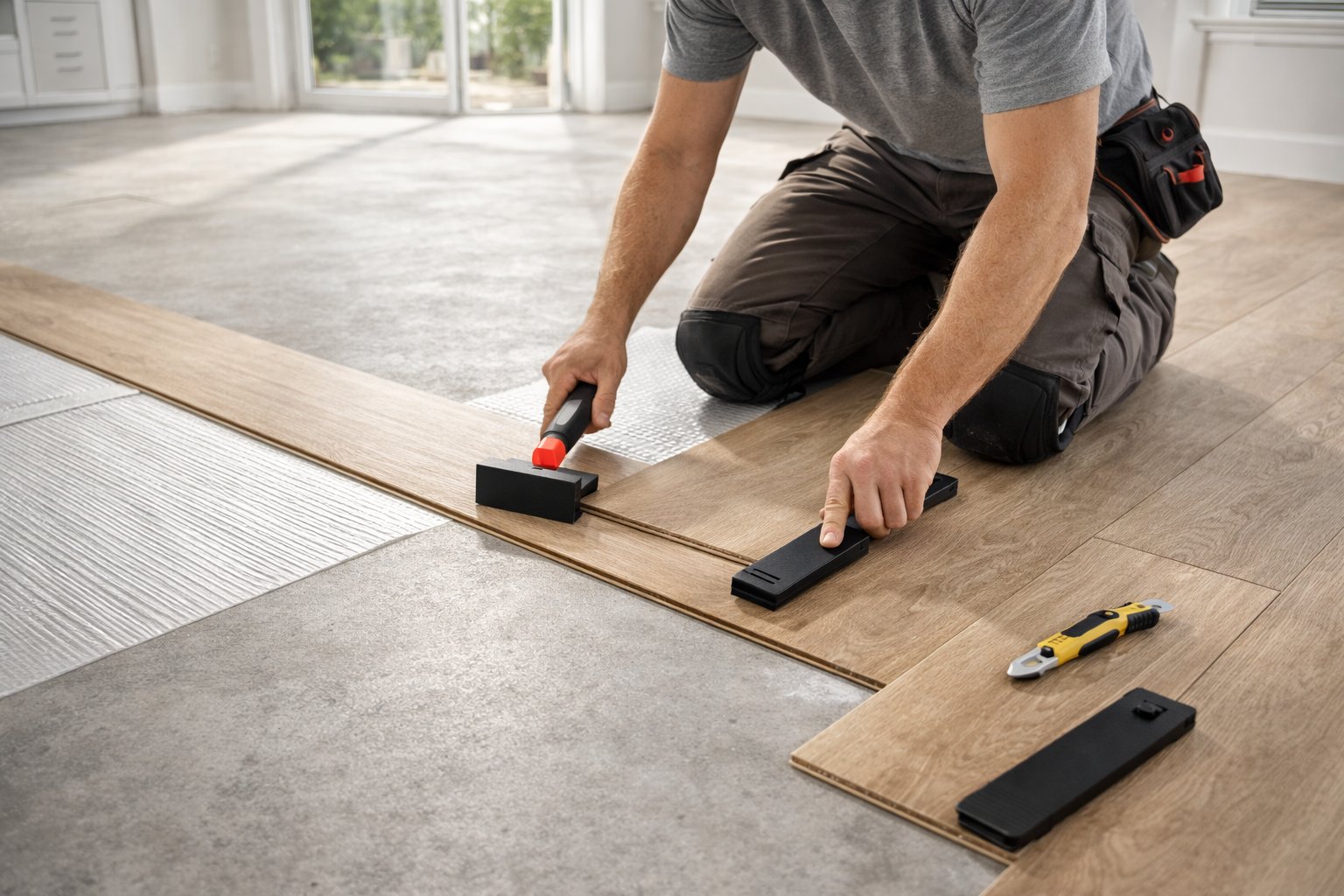
Concrete slabs are common across New Jersey homes, especially in basements, slab-on-grade construction, and additions. Luxury vinyl flooring has become a go-to solution for these spaces because it delivers durability, moisture resistance, and modern design flexibility without the challenges of traditional materials. Even so, installing luxury vinyl flooring over concrete is not a shortcut job. Performance depends heavily on preparation, moisture control, and choosing the correct installation method from the start.
This guide breaks down how luxury vinyl flooring should be installed over concrete slabs and where attention to detail makes the biggest difference long term.
Why concrete slabs demand a different approach
Concrete may look solid and dry, but slabs constantly interact with ground moisture and temperature changes. Vapor transmission, minor cracking, and surface unevenness are common—even in newer homes. Luxury vinyl flooring performs well over concrete only when these factors are addressed upfront.
Skipping slab prep often leads to issues such as plank separation, telegraphing cracks, adhesive failure, or soft spots underfoot. Proper planning avoids these problems and protects the investment.
Moisture testing comes before product selection
Moisture testing is not optional when installing over concrete. Slabs can hold moisture that is invisible at the surface. Calcium chloride tests or relative humidity probes are commonly used to determine moisture levels and identify whether a moisture barrier or specific adhesive system is required.
Many floating luxury vinyl products include waterproof cores, but that does not eliminate the need for vapor protection beneath the floor. Moisture moving upward through the slab can still affect joints, underlayment, and long-term stability.
Surface preparation sets the foundation
Concrete slabs must be clean, flat, and structurally sound before installation begins. This step is often underestimated and rushed, yet it determines how well the finished floor performs.
Grinding down high spots, filling control joints and hairline cracks, and leveling low areas with appropriate patching compounds creates a uniform surface. Most luxury vinyl manufacturers allow only minimal variation across the slab, typically no more than 3/16 inch over ten feet.
Ignoring flatness requirements leads to flexing planks, weak locking systems, and premature wear.
Floating vs glue-down installation on concrete
Luxury vinyl flooring is available in floating and glue-down formats, and both can work over concrete when installed correctly.
Floating systems rely on precise slab flatness and proper underlayment selection. They allow for slight movement and are often preferred in residential spaces where comfort and acoustics matter.
Glue-down systems offer excellent stability in areas with heavy foot traffic or rolling loads. They bond directly to the slab, making moisture testing and adhesive compatibility especially important.
Understanding how different luxury vinyl flooring options interact with concrete helps ensure the right system is chosen for the space.
Underlayment and vapor barrier considerations
Not all luxury vinyl products require underlayment, and using the wrong one can cause failures. Some planks include an attached pad, while others require a specific underlayment approved by the manufacturer.
When installing over concrete, a vapor barrier is often necessary, even with waterproof flooring. Plastic sheeting or manufacturer-approved membranes help block moisture migration and protect locking systems and adhesives.
Each product has different requirements, making professional guidance critical before materials are ordered.
Expansion gaps still matter on slabs
Concrete does not expand like wood, but luxury vinyl still responds to temperature changes. Expansion gaps around walls, columns, and fixed objects allow the floor to move naturally without buckling or stress.
Baseboards and trim conceal these gaps, preserving clean aesthetics while maintaining performance. Tight installations without expansion space often fail months after completion.
Acclimation and jobsite conditions
Luxury vinyl flooring must acclimate to jobsite conditions before installation. Temperature swings, especially in basements or unfinished areas, can affect plank dimensions.
Maintaining consistent indoor temperature and humidity before, during, and after installation supports proper locking and adhesive curing. Rushing installation before the space is conditioned introduces unnecessary risk.
Professional installation protects performance
Concrete slab installations leave little room for error. Moisture readings, leveling tolerances, and product-specific requirements vary widely between manufacturers. Experienced installers know how to adapt techniques to slab conditions while preserving warranties and long-term durability.
Working with professional residential flooring installation services ensures the slab is evaluated correctly and the flooring system performs as intended.
Get expert help with slab-ready luxury vinyl installation
For luxury vinyl flooring installations over concrete slabs across Bedminster, Bernardsville, Basking Ridge, Mendham, and Morristown, our flooring experts handle moisture testing, surface preparation, and precision installation from start to finish. Schedule a consultation through our Contact Us page to plan a flooring solution built for long-term performance.


